
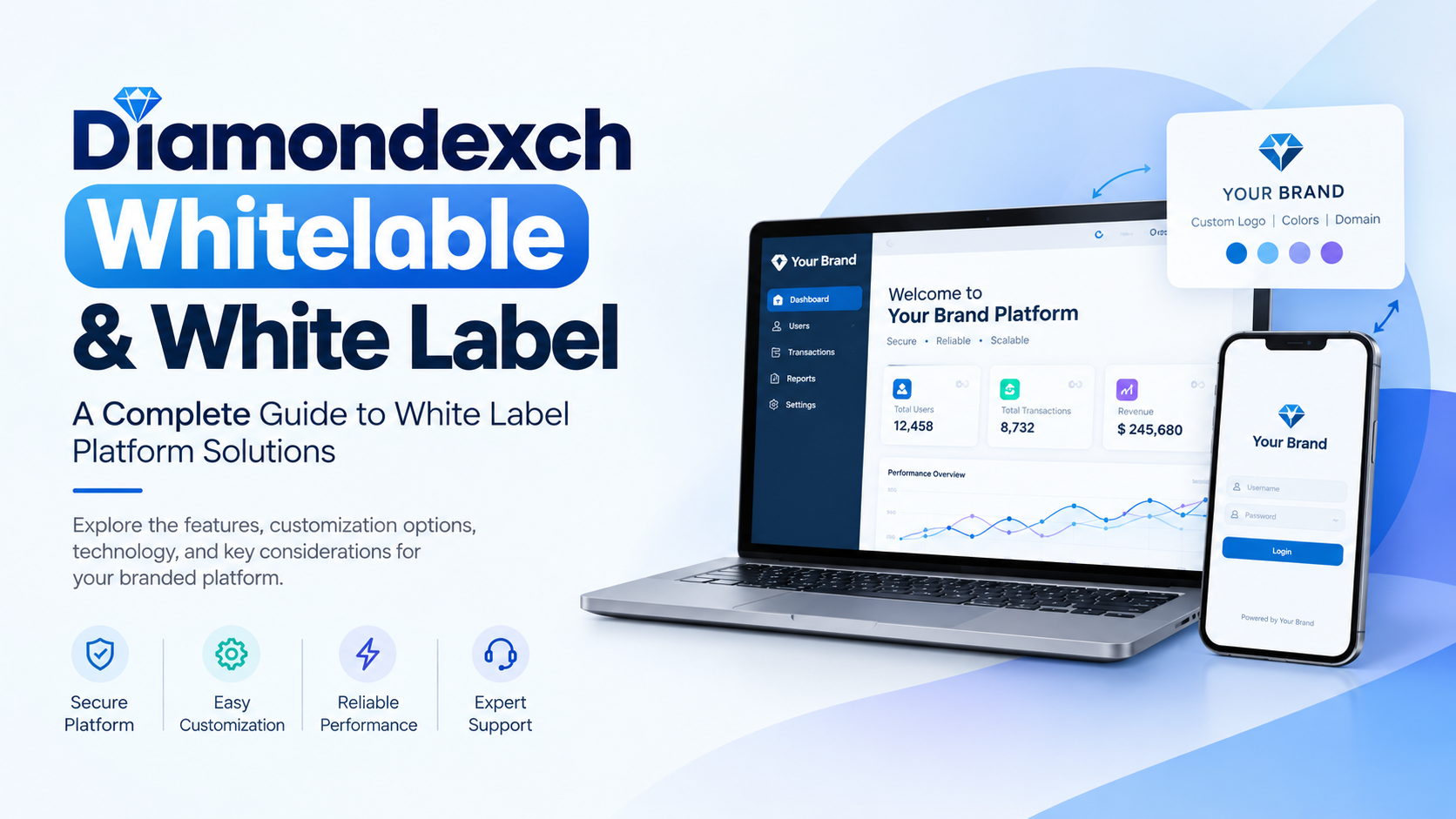
The demand for customizable digital platforms has encouraged businesses to explore technology solutions that offer flexibility, recognizable branding, and streamlined management. White label platforms are one approach to meeting these requirements because they allow businesses to operate under their own brand while using an underlying technology solution developed or maintained by another provider.
The term diamondexch whitelable is relevant to searches from people exploring branded platform solutions associated with the Diamondexch name. Understanding the technology, available features, customization options, and operational requirements is important before choosing any white label service.
A well-planned platform should offer more than a branded interface. Reliability, security, transparent commercial terms, technical support, and compliance with applicable regulations are equally important factors. This guide explains the fundamentals of white label platforms and the considerations businesses should evaluate when researching available solutions.
What Is a Diamondexch White Label Platform?
A white label platform is a technology solution that can be customized with a business’s branding and presented to its customers under an approved brand identity. Depending on the provider and the nature of the service, customization may include the platform name, visual design, domain configuration, user interface, and selected operational features.
The phrase diamondexch white label is used to describe searches related to white label opportunities associated with the Diamondexch brand. However, the precise services, features, commercial arrangements, and eligibility requirements should always be confirmed directly with an authorized provider.
The general appeal of a white label model is that businesses may not need to develop every component of a platform independently. Instead, they can evaluate an existing technology infrastructure and determine whether it meets their operational requirements.
Before entering an agreement, businesses should establish who owns the underlying technology, which organization provides customer support, how data is handled, and whether the intended business activity is permitted in the relevant jurisdiction.
How Does a White Label Business Model Work?
White label arrangements typically involve a technology provider and a business that wants to offer a service under its own brand. The technology provider supplies some or all of the underlying infrastructure, while the business manages its customer-facing identity and other responsibilities according to the agreement.
The exact arrangement differs between providers. Some solutions include hosting, technical maintenance, interface customization, and administrative tools. Others may require the business to arrange additional services independently.
The process generally begins with identifying business requirements. These may include branding preferences, expected traffic, user-management requirements, security controls, reporting capabilities, and customer-support arrangements.
The next stage involves reviewing the provider’s technical capabilities and contractual terms. Businesses should clarify the setup process, implementation timeline, recurring costs, service availability, and responsibilities for updates or unexpected technical issues.
Once an agreement is approved, implementation can proceed according to the provider’s documented process. Testing should take place before launch to verify that the platform functions correctly, sensitive information is protected, and the customer experience meets the intended standards.
Important Features to Evaluate Before Choosing a Platform
Selecting a white label solution requires a careful assessment of both technical functionality and business suitability. A visually appealing interface is useful, but it should not replace a thorough review of the underlying service.
Branding and Customization
Brand consistency helps customers recognize a service and understand its identity. Depending on the solution, customization may cover logos, colors, navigation, domain settings, and selected interface elements.
Businesses should confirm which elements can be customized and whether changes require technical assistance. It is also important to understand any restrictions involving brand names, trademarks, and third-party intellectual property.
Platform Reliability and Performance
A reliable platform should perform consistently under expected operating conditions. Slow loading times, frequent downtime, and inconsistent functionality can undermine customer confidence.
When evaluating a provider, review its documented uptime commitments, infrastructure arrangements, maintenance procedures, and incident-response process. Ask how service interruptions are communicated and what support is available when an issue affects customers.
Performance testing should consider common user journeys and different device sizes. A platform should remain usable on desktop computers, tablets, and mobile phones where those devices are supported.
Security and Data Protection
Security should be a central part of every technology evaluation. Businesses should understand how accounts are protected, how access permissions are managed, and how sensitive information is stored and transmitted.
Useful safeguards may include encrypted connections, secure authentication, role-based access controls, appropriate logging, timely software updates, and a documented process for responding to security incidents.
It is equally important to clarify data ownership, retention policies, backup procedures, and the circumstances in which information may be shared with third parties. Providers should be able to explain their security practices without relying solely on general marketing claims.
Administrative Tools and Reporting
Administrative functionality can help businesses monitor platform operations and manage authorized users. Depending on the service, these tools may include account management, activity reporting, configurable permissions, and operational dashboards.
Before selecting a solution, identify the information your team needs to access and verify whether the available reports meet those requirements. Access to administrative tools should follow the principle of least privilege, giving each person only the permissions necessary for their responsibilities.
Technical Support and Maintenance
A provider’s support arrangements can significantly affect day-to-day operations. Businesses should establish the available support channels, operating hours, expected response times, escalation procedures, and responsibilities for troubleshooting.
Clarify whether maintenance, upgrades, and security fixes are included in the agreement. Understanding these details in advance helps prevent misunderstandings and makes it easier to plan for ongoing operational costs.
Benefits and Limitations of White Label Solutions
One potential advantage of a white label platform is reduced development effort. Instead of creating every component from the ground up, a business may be able to use an existing technology solution and focus on branding, customer experience, and operational planning.
A second advantage is the possibility of a shorter implementation period. The actual timeline depends on the provider, the level of customization, the complexity of integrations, and any required compliance reviews.
White label arrangements may also provide access to established administrative features and technical infrastructure. However, the quality and scope of these capabilities vary considerably, so businesses should verify what is included rather than assuming every provider offers the same functionality.
There are limitations to consider as well. Businesses may depend on the provider for technical changes, upgrades, and infrastructure availability. Customization can be restricted, and contractual terms may affect portability, data access, or the ability to change providers later.
For these reasons, a white label solution should be evaluated as a long-term operational decision rather than simply a branding exercise. A detailed comparison of service quality, costs, security, contractual obligations, and compliance requirements can help businesses make a more informed choice.
Understanding Costs and Commercial Terms
The cost of a white label solution depends on the provider’s pricing model and the services included. Potential expenses may include initial setup, recurring platform fees, hosting, customization, technical support, integrations, and additional maintenance.
A low initial price does not necessarily represent the lowest total cost. Businesses should calculate expected expenditure over a suitable period and determine whether the agreement includes essential services such as updates, backups, support, and incident handling.
It is also important to examine termination conditions, renewal terms, ownership of customized assets, data-export options, and any restrictions on transferring a domain or moving to another provider. Before signing an agreement, request a clear written breakdown of all charges and responsibilities. Where the platform relates to a regulated activity, confirm that the proposed business model and all associated services are lawful in the intended market.
Legal and Regulatory Considerations
Legal requirements should be assessed before launching any branded digital platform. The applicable rules depend on the nature of the service, the locations in which it operates, and the jurisdictions in which its customers reside.
Businesses should verify whether licences, registrations, age-verification procedures, consumer-protection measures, or other safeguards are required. They should also review privacy obligations, payment-processing requirements, advertising restrictions, and any applicable rules concerning customer funds. A technology provider’s willingness to supply a platform does not automatically establish that every proposed use is legally permitted. Businesses remain responsible for understanding their obligations and obtaining independent legal advice where appropriate.
Trademark permission is another important consideration. The Diamondexch name and any associated branding should be used only where the relevant rights and authorization have been established. Do not assume that a third-party service is officially affiliated with a brand simply because it uses a similar name.
How to Assess a White Label Provider
A structured evaluation can reduce uncertainty before a business commits to a platform. Start by verifying the provider’s identity, business registration where applicable, contact information, and contractual authority to supply the service.
Next, request technical documentation covering infrastructure, security controls, supported integrations, maintenance arrangements, and incident management. Ask for a demonstration or suitable testing environment so that the relevant functionality can be reviewed before launch.
Reference checks and independently verifiable customer feedback may provide additional insight into service quality. However, testimonials alone should not replace technical due diligence or a review of contractual commitments.
Finally, compare providers against consistent criteria. A solution that meets your branding requirements but lacks adequate security, transparent pricing, dependable support, or regulatory suitability may create more problems than it solves.
Frequently Asked Questions
What does diamondexch whitelable mean?
The phrase is a search term associated with white label platform opportunities connected to the Diamondexch name. The specific offering, available features, and legitimacy of any provider should be verified directly before proceeding.
What is the difference between diamondexch whitelable and diamondexch white label?
Both phrases express a similar search intent. “Whitelable” is a common alternative spelling of “white label,” while “diamondexch white label” uses the conventional two-word expression. Their use in a search does not establish that a particular service is officially authorized.
Can a white label platform be customized?
Customization depends on the provider and the agreement. Common possibilities include branding, interface styling, domain configuration, and selected administrative features. Businesses should confirm the exact scope before signing a contract.
What should businesses check before selecting a white label service?
Review the provider’s identity, technical capabilities, security controls, support arrangements, pricing, contractual conditions, data-handling policies, and compliance requirements. Verify any claims about performance or features independently where possible.
Is a white label solution suitable for every business?
No. Suitability depends on the business model, technical requirements, budget, provider reliability, and legal obligations. Some organizations may benefit from an existing platform, while others may require a more customizable or independently developed solution.
Final Thoughts
White label technology can provide a practical route to launching a branded digital service, but choosing the right provider requires more than comparing features or setup costs. Security, reliability, transparent agreements, customer support, and legal compliance should all be part of the decision-making process.
For anyone researching diamondexch whitelable or diamondexch white label solutions, the most important step is to verify the specific offering and its provider before making a commitment. A careful evaluation helps businesses understand what they are receiving, what responsibilities they retain, and whether the solution is appropriate for their intended use. By focusing on verifiable information and long-term operational requirements, businesses can make more informed technology decisions and avoid relying on unsupported claims when evaluating white label platforms.