
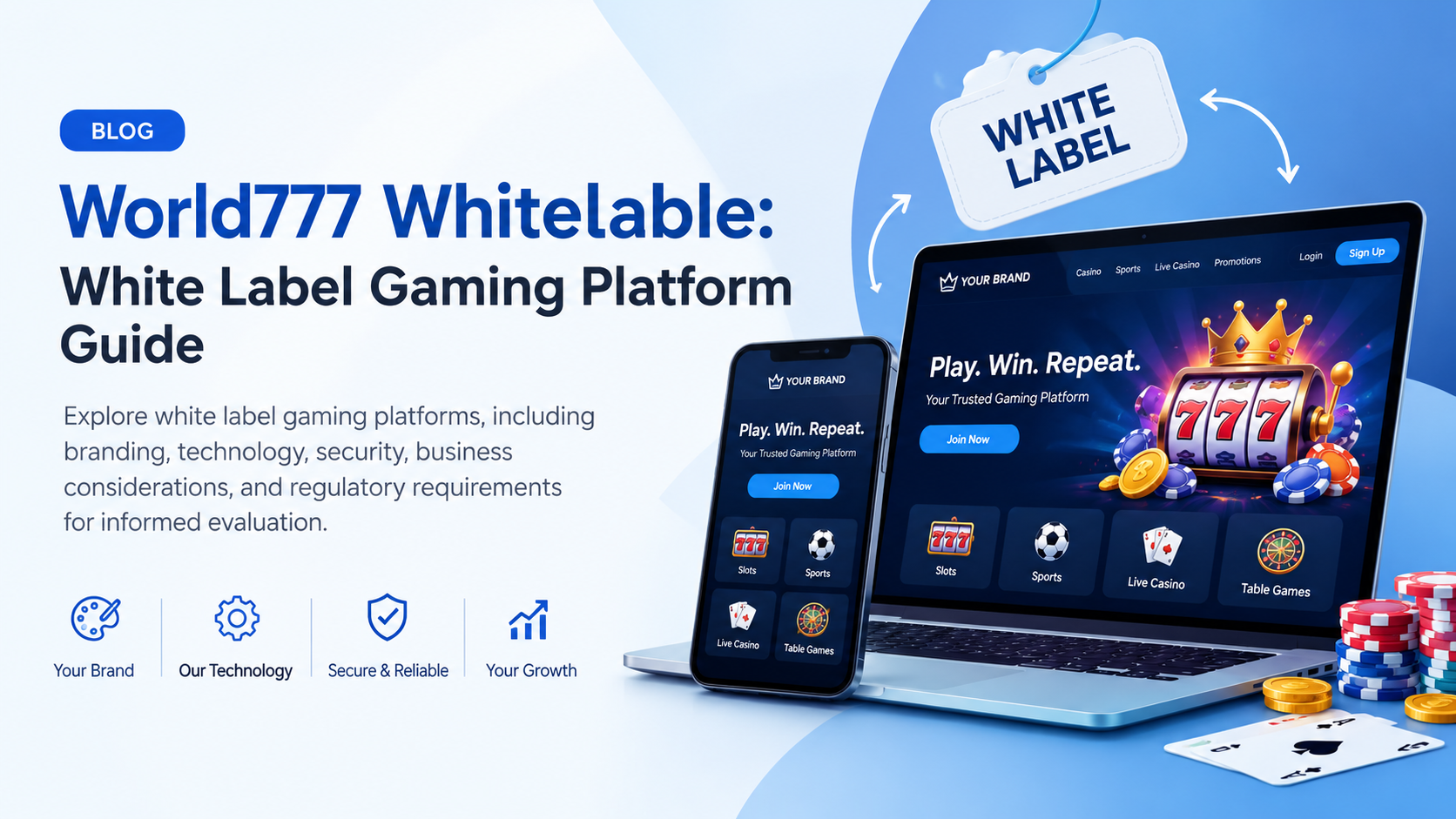
The online gaming industry continues to evolve as technology makes it easier for businesses to explore digital platforms, branded user experiences, and online account management systems. One concept attracting attention in this space is the white label model, which allows businesses to operate under their own branding while relying on technology and infrastructure provided by a third party.
Understanding how world777 whitelable solutions work can help readers evaluate the available options, identify essential platform requirements, and make more informed decisions before entering this sector.
What Is a White Label Gaming Platform?
A white label gaming platform is a technology solution developed or supplied by one company that another business can potentially offer under its own brand. Instead of developing every technical component independently, the business may use an existing platform to support selected operations, depending on the provider’s agreement and capabilities.
These solutions can include website infrastructure, account management, user interfaces, reporting tools, payment integrations, and administrative dashboards. However, the exact features depend on the provider, the contract, and the applicable regulatory requirements.
The main idea behind this model is to reduce the technical work involved in launching a digital platform. Businesses can focus on branding, customer support, and operational planning while the technology provider handles the components covered by the agreement.
How Does the World777 White Label Model Work?
People searching for world777 white label information may be looking to understand the relationship between a gaming brand, the platform technology, and the services supporting its operation.
In a typical white label arrangement, the process begins with selecting a technology provider and agreeing on the services required. The parties then establish the branding, website configuration, user access, and operational responsibilities. If the platform includes payments or gaming functionality, additional requirements may apply to identity verification, transaction monitoring, responsible gaming, and regulatory compliance.
The provider may manage technical maintenance and infrastructure, while the operating business handles certain customer-facing activities. These responsibilities are not universal, so businesses should review the agreement carefully rather than assume that every provider offers the same services.
It is also important to distinguish general information about white label technology from verified information about a particular brand. Specific claims about World777’s ownership, licensing, platform features, or partnership opportunities should be confirmed through reliable official sources.
Key Features to Evaluate Before Choosing a White Label Platform
Choosing a platform requires more than reviewing its appearance or promotional claims. The technology must be reliable, secure, maintainable, and suitable for the intended business model.
Custom Branding and Website Design
Branding helps establish a consistent experience across the website, navigation, and customer communication. Before selecting a provider, businesses should determine which design elements can be customized, whether the platform supports mobile devices, and whether the brand can maintain control over its domain and website content.
Security and Account Management
Security should be a central consideration for any platform that processes personal information or manages user accounts. Important areas to evaluate include access controls, encryption, secure authentication, data protection practices, and procedures for responding to security incidents.
Businesses should also understand which party is responsible for protecting user data and addressing potential vulnerabilities.
Payment Integration and Transaction Records
Where payment processing is involved, the platform should support appropriate transaction records, reconciliation, and fraud-prevention procedures. Payment services must be compatible with the operating jurisdiction and the nature of the business.
A provider’s ability to integrate a payment method does not automatically mean that the associated gaming activity or business operation is legally permitted.
Performance and Technical Support
Website performance can influence usability, customer satisfaction, and search visibility. Review the provider’s uptime commitments, backup procedures, maintenance schedule, technical support arrangements, and ability to handle changes in traffic.
Clear service-level agreements can help establish expectations regarding outages, maintenance, and issue resolution.
Benefits and Limitations of the White Label Approach
One potential advantage of a white label solution is that it can reduce the need to build a complete technology stack from the beginning. Depending on the agreement, businesses may gain access to established software, technical support, and selected operational tools without independently developing every component.
Another advantage is the possibility of faster implementation. Reusing an existing platform may shorten development time, although customization, integrations, testing, and compliance checks can still require substantial effort.
The model also has limitations. Businesses may depend on the provider for software updates, infrastructure availability, and certain technical decisions.
For these reasons, a thorough evaluation should include total operating costs, ownership of customer data, contract termination conditions, integration requirements, and the ability to export information when the agreement ends.
SEO Considerations for a White Label Gaming Website
Search engine optimization can help a website communicate its purpose clearly and make its content easier for search engines and visitors to understand. However, including a brand-related keyword in a page does not guarantee higher rankings.
A useful SEO strategy begins with understanding the searcher’s intent. Someone researching a white label platform may want a technical explanation, information about a provider, business requirements, or details about the available services. The content should address the relevant question accurately rather than simply repeat the target phrase.
Use a descriptive page title, a clear H1 heading, logically organized subheadings, and a concise meta description. Add internal links to genuinely relevant pages and ensure the website works well on mobile devices. Page speed, accessibility, original information, and trustworthy sourcing also contribute to the overall quality of the website.
If the article discusses a specific brand, avoid unsupported statements about partnerships, licensing, ownership, or guaranteed business returns. Accurate information helps establish credibility and provides readers with a better basis for evaluating the subject.
Legal and Responsible Gaming Considerations
Online gaming regulations vary between countries and sometimes between regions within the same country. A business considering a white label arrangement should establish which licenses, permissions, consumer protections, and advertising restrictions apply before launching or promoting the service.
The agreement should clearly identify the responsibilities of the technology provider and the operating business. Depending on the service, these may include age verification, identity checks, anti-money-laundering controls, privacy obligations, dispute resolution, and responsible gaming safeguards.
Businesses should obtain appropriate legal advice for their intended markets and verify licensing information through the relevant regulatory authorities.
Frequently Asked Questions
What is the difference between a white label platform and custom-built software?
A white label platform generally uses existing technology that can be presented under another business’s branding. Custom-built software is developed to meet specific requirements and may offer greater control, but it can require more time, technical resources, and ongoing maintenance.
Is a white label platform suitable for every business?
No. Suitability depends on the business model, target market, available budget, technical requirements, provider terms, and applicable laws. Businesses should compare the complete costs and responsibilities before making a commitment.
What should businesses verify before choosing a provider?
They should review the provider’s identity, technical capabilities, security measures, contractual terms, data ownership arrangements, support commitments, and any relevant licensing or regulatory requirements. Claims about a specific brand or service should be independently verified.
Conclusion
White label technology provides one approach to launching a branded digital platform without developing every technical component independently. Its suitability depends on the quality of the underlying software, the flexibility of the agreement, the provider’s reliability, and the legal requirements of the intended market.
For readers researching World777-related services, the most useful next step is to distinguish verified brand information from general descriptions of white label platforms. Careful research, transparent business arrangements, strong security practices, and responsible operations are essential when evaluating any solution in the online gaming sector.